Want to go back to my other projects?
Motionly, a fictive training and workout app
Client
Personal school project
Spring 2023
Role
Sole UX/UI Designer
Tools
Figma / Photoshop / Pen and paper
Research methods
Web-based survey
User analysis
personas
storyboard
conceptual modelling
Prototyping
Project overview
In this project, I designed a fitness app aimed at motivating people who do not exercise regularly. A survey on everyday exercise, health and existing fitness apps revealed that many respondents felt less motivated because they lacked a training partner(s).
Based on these insights, the concept was developed to support both individual workouts and social interaction. Users can connect, add friends and encourage each other, while gamification elements such as challenges and rewards enhance engagement.
The goal was to make everyday exercise more accessible and motivating by combining physical activity with social connection.
Process
Target group definition and personas
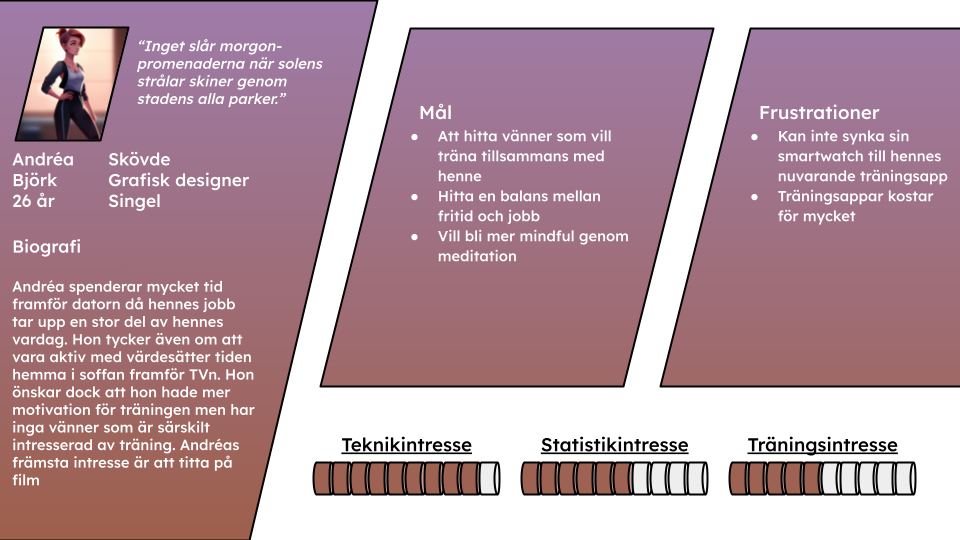
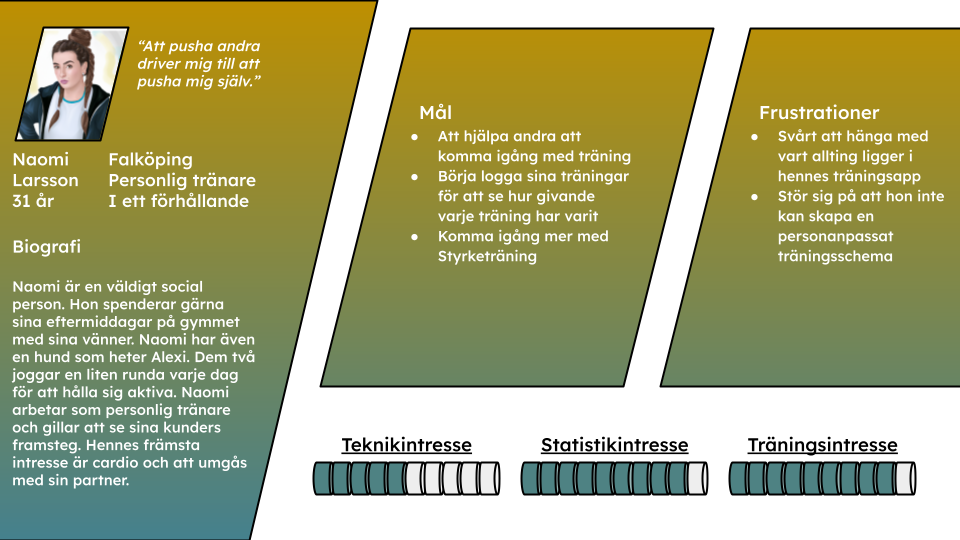
To better understand the intended users, a survey about everyday exercise, health and opinions on existing fitness apps was conducted via Google Forms. Results showed that many participants lacked training partners, which lowered motivation. Based on these insights, two personas were developed: Andréa Björk, who wants to find friends to exercise with and Naomi Larsson, who seeks to track her workouts and achievements in a more engaging way. These personas highlighted both motivational drivers and frustrations, such as high app subscription costs or cluttered interfaces and guided design priorities.
Problem identification and requirements
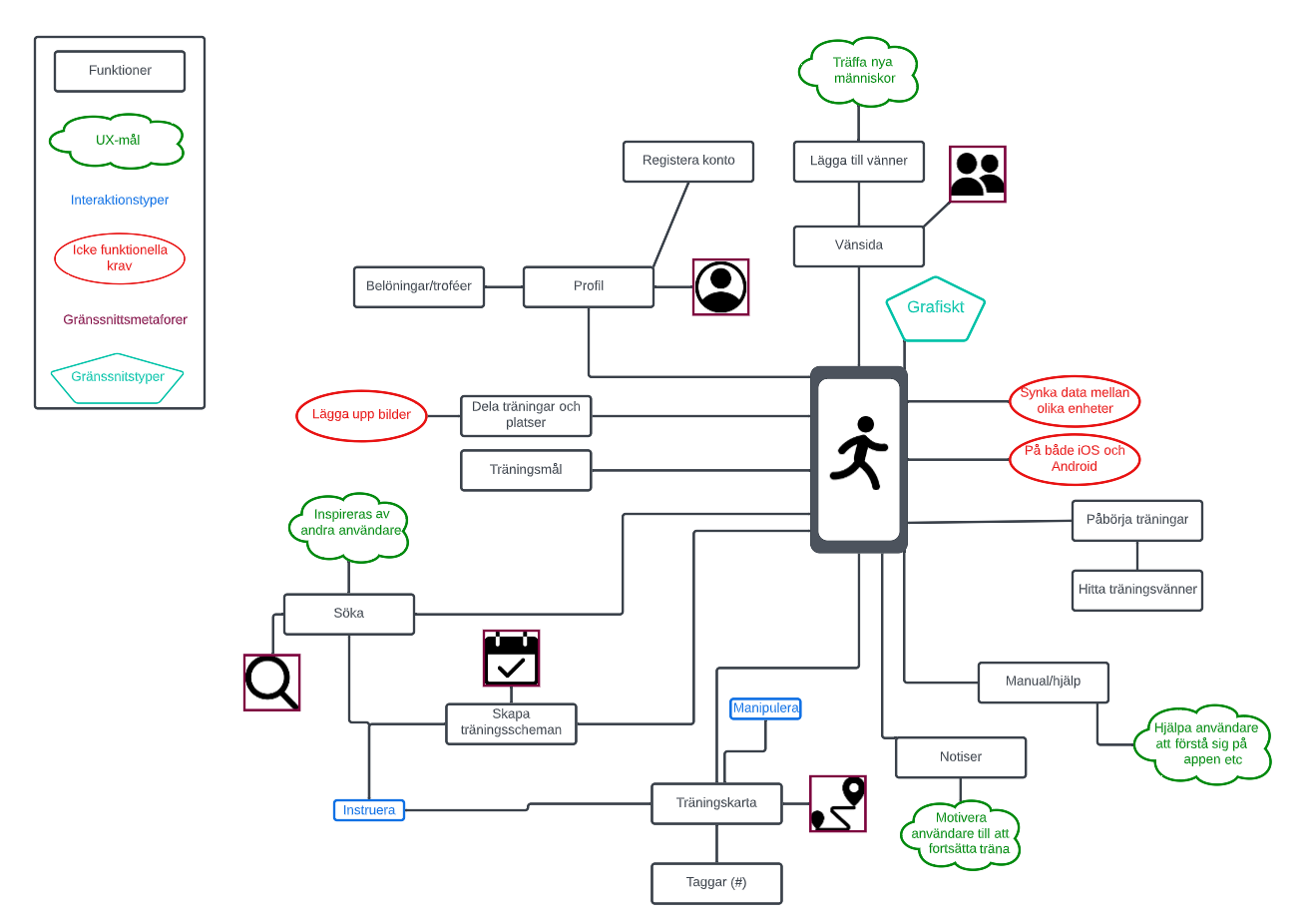
From the survey data, several key needs and frustrations were distilled into requirements. Examples included the ability to connect with new friends, motivation through gamified elements and intuitive navigation to avoid overwhelming information. These were framed as UX goals such as supporting mindfulness, providing affordable access and visualizing progress clearly. A conceptual model was then developed to structure the app’s functions (e.g., profile, map, manual, notifications) and tie them to user experience goals.
Lo-fi prototyping and exploration
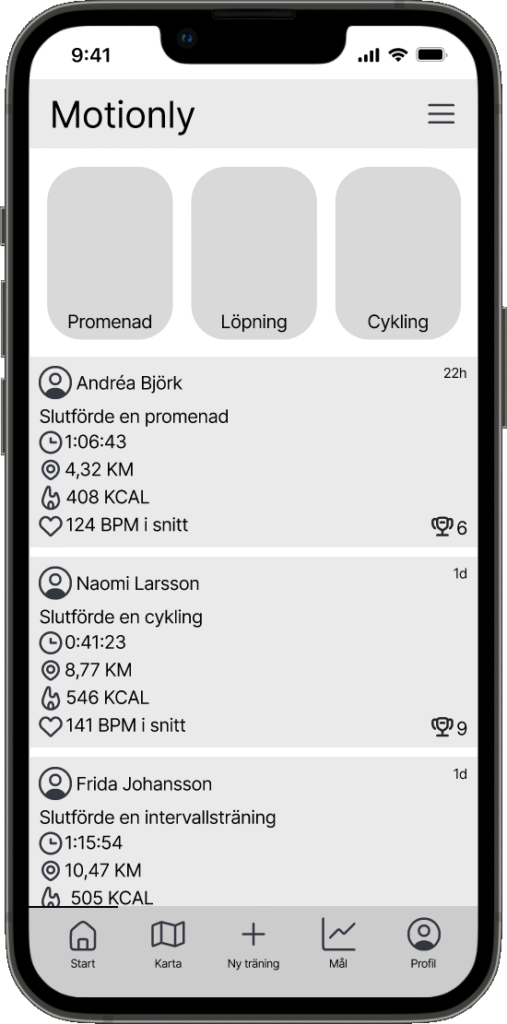
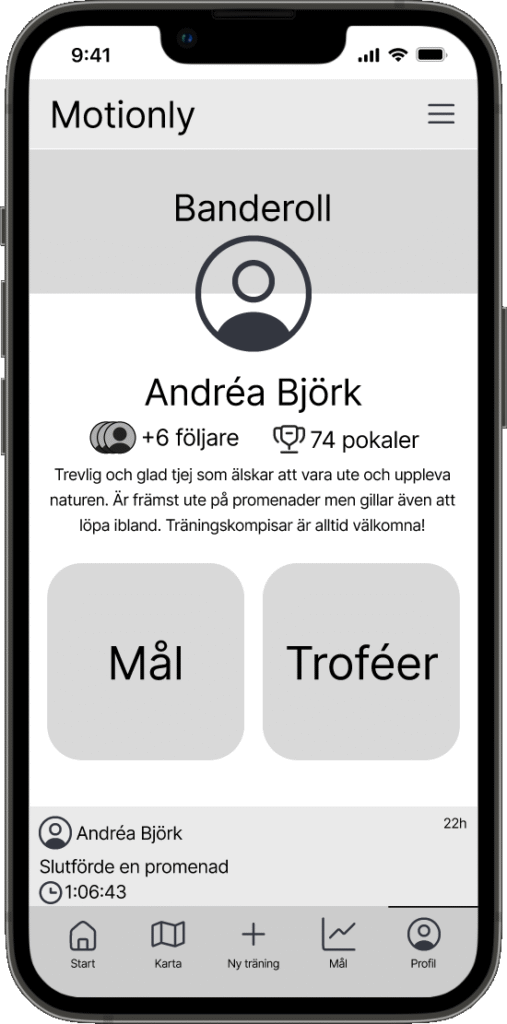
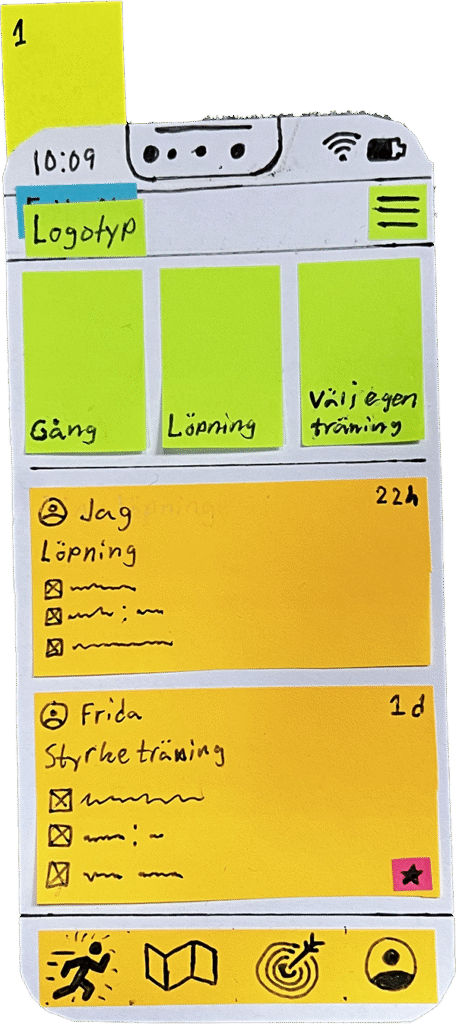
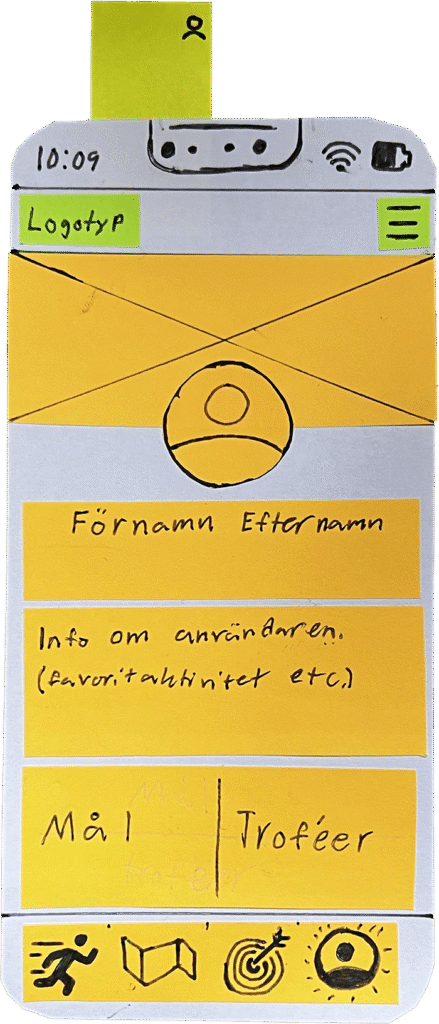
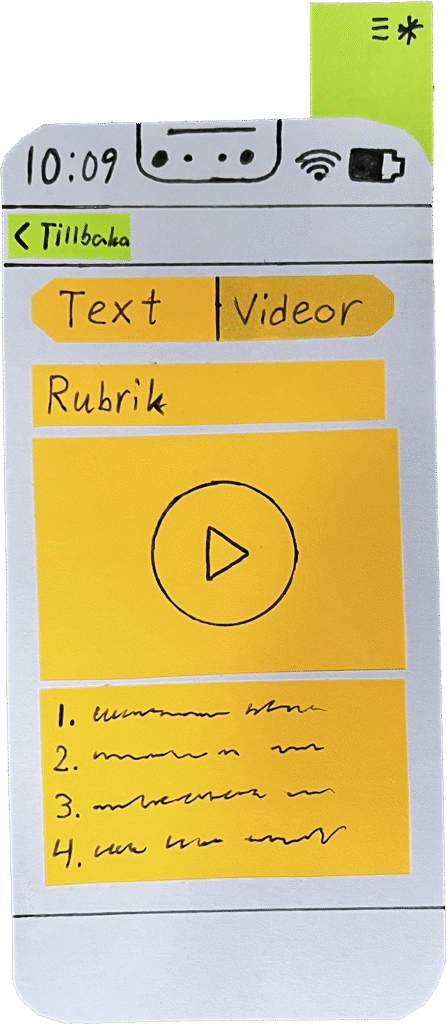
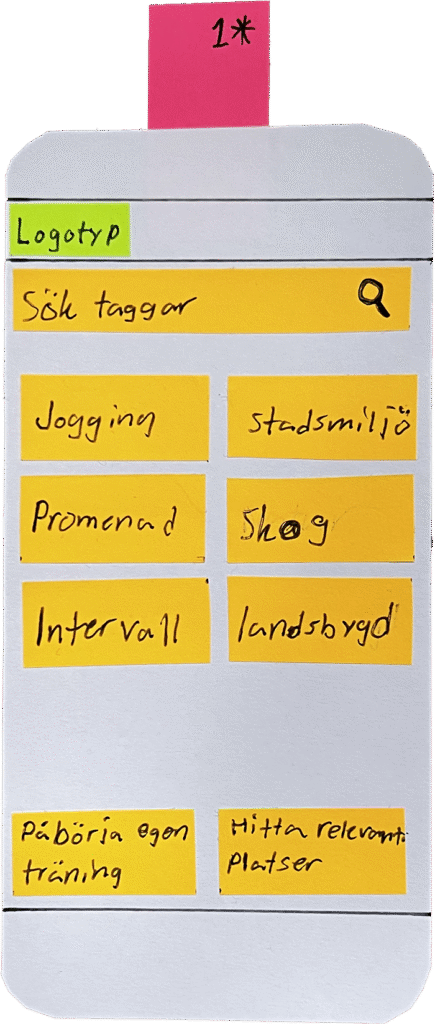
Early design exploration began with thumbnail sketches to generate a wide range of interface ideas, followed by more concrete concept sketches of menus, interactive buttons and map features. A lo-fi prototype was then created from paper cutouts and post-its, simulating interactions through manual switching of screens. This allowed quick iteration and the application of Gestalt principles like similarity and continuity to distinguish interactive elements. The lo-fi prototype focused on the start screen, profile, manual and tag-based friend search.
Mid-fi prototyping and heuristics
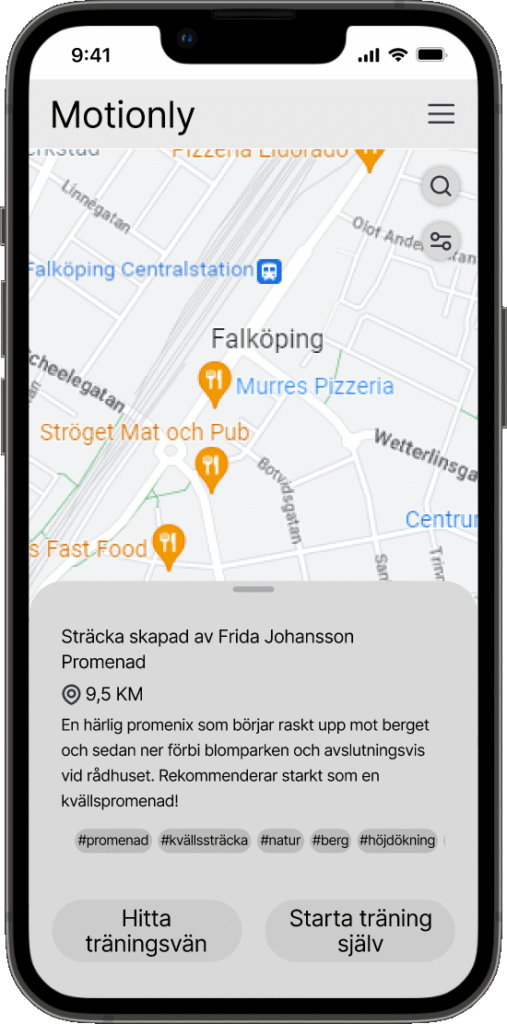
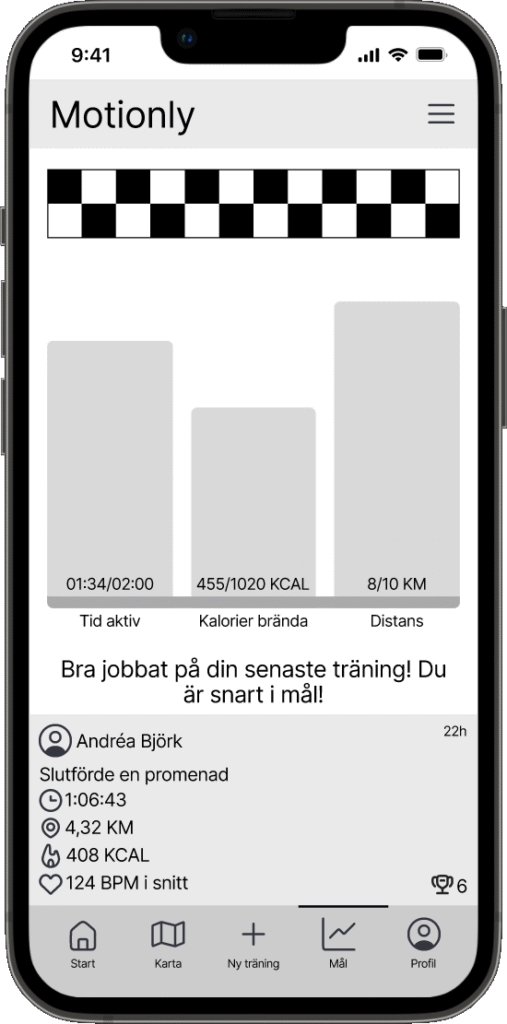
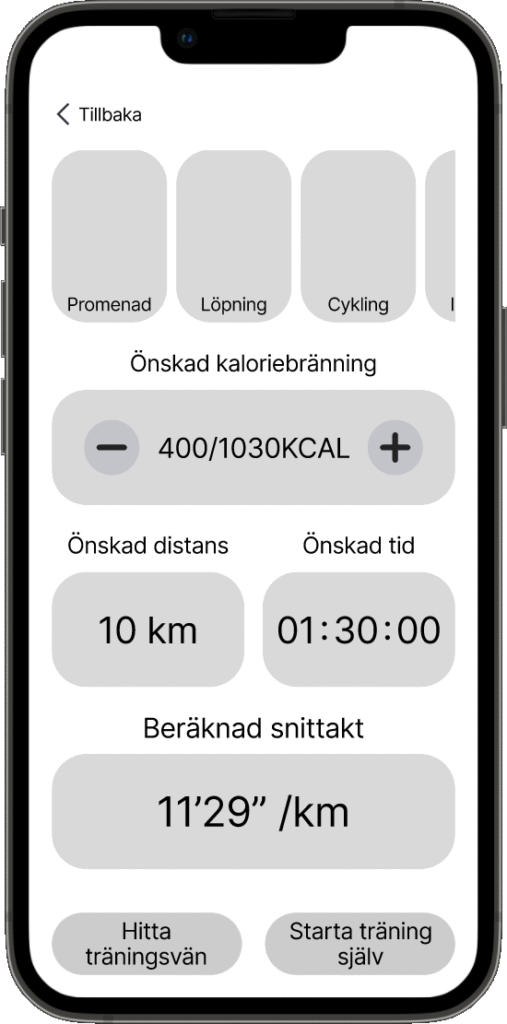
A mid-fi prototype was developed in Figma, refining layout and interaction design while maintaining grayscale visuals to keep the focus on usability. The prototype emphasized what the lo-fi focused on along with training map, tag selection, and training options. Gestalt laws such as similarity, continuity, and common region guided placement and grouping, while Nielsen’s heuristics like “user control and freedom” and “recognition rather than recall” informed navigation and tag suggestions. Gamification elements such as trophies and progress markers were also introduced to enhance motivation and engagement throug gamification.
Results
The survey and personas revealed three main priorities: supporting social connections, visualizing progress, and keeping core features accessible without high costs. These insights shaped the design focus. The app therefore emphasized friend-finding through tags, gamified tracking of achievements, and a simplified navigation structure to avoid clutter.
Keep in mind this is one of the first projects I did in my studies, though a project I am very proud to present. What follows below are images to better understand the different parts of the process made.
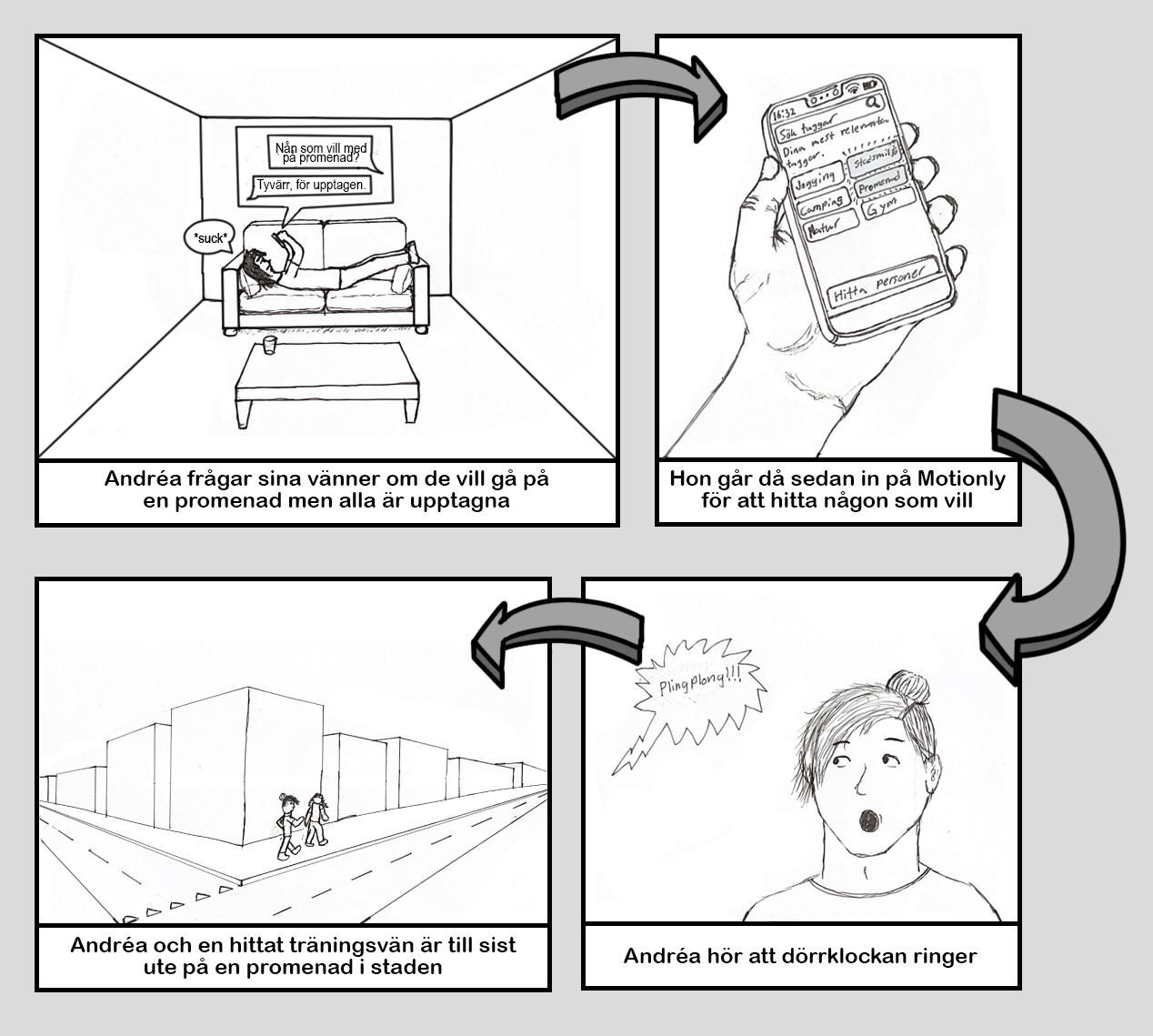
Storyboard
Conceptual model
The personas made for this project
Lo-fi prototype
Mid-fi prototype