Want to go back to my other projects?
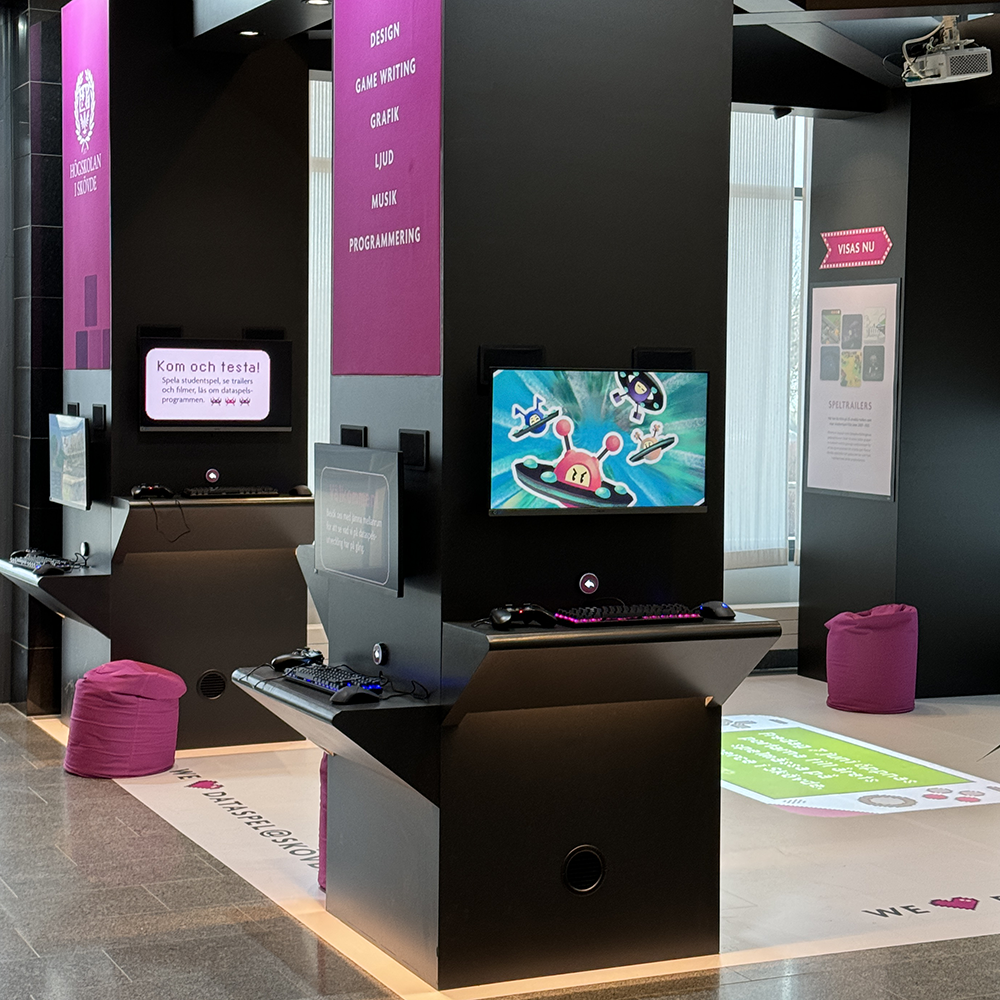
Interactive and dynamic demonstrative environment
Client
University of Skövde
Spring 2024
Role
UX/UI designer and shared project manager
Tools
Figma / Photoshop
Research methods
Heuristic evaluation
User analysis
Personas
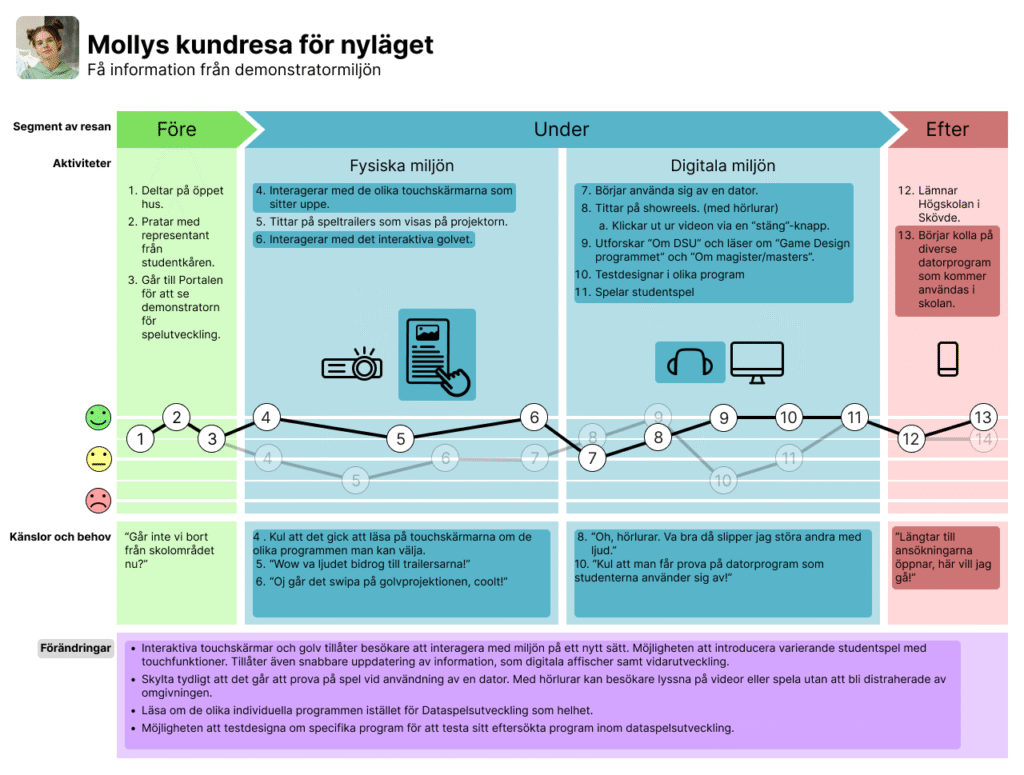
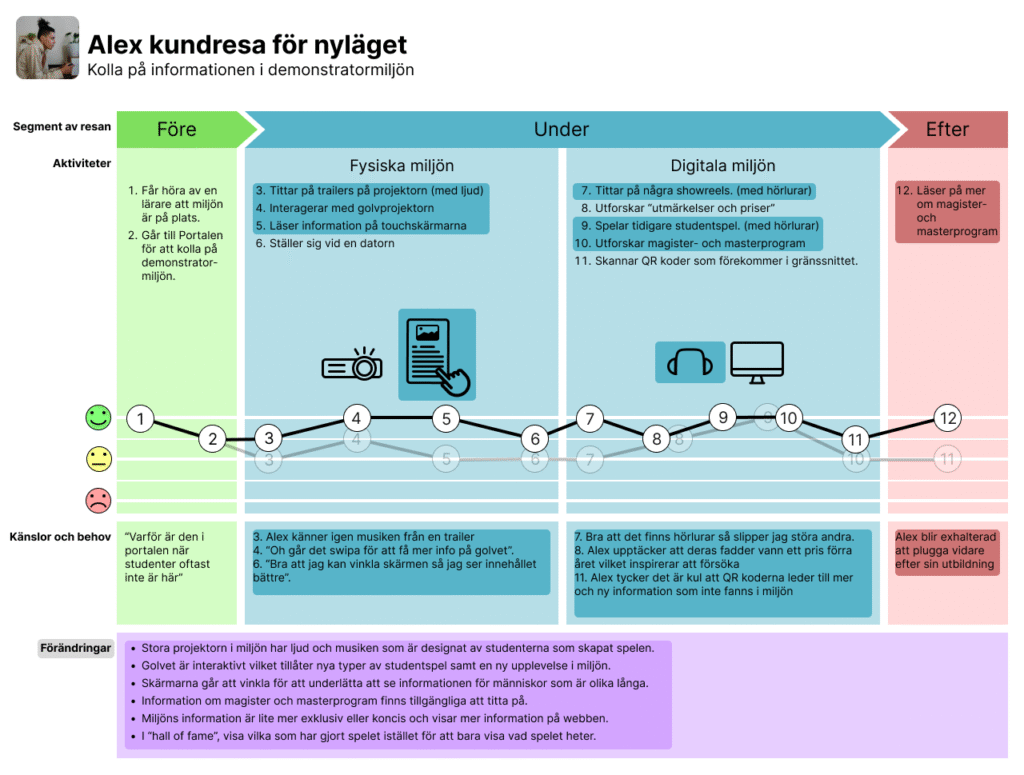
User journey maps
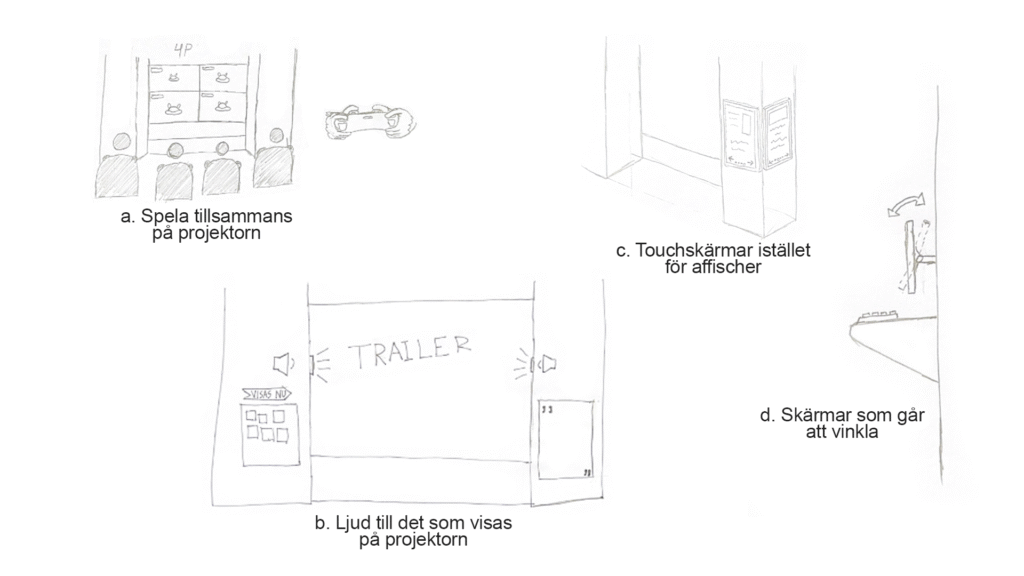
Sketching
Prototyping
Project overview
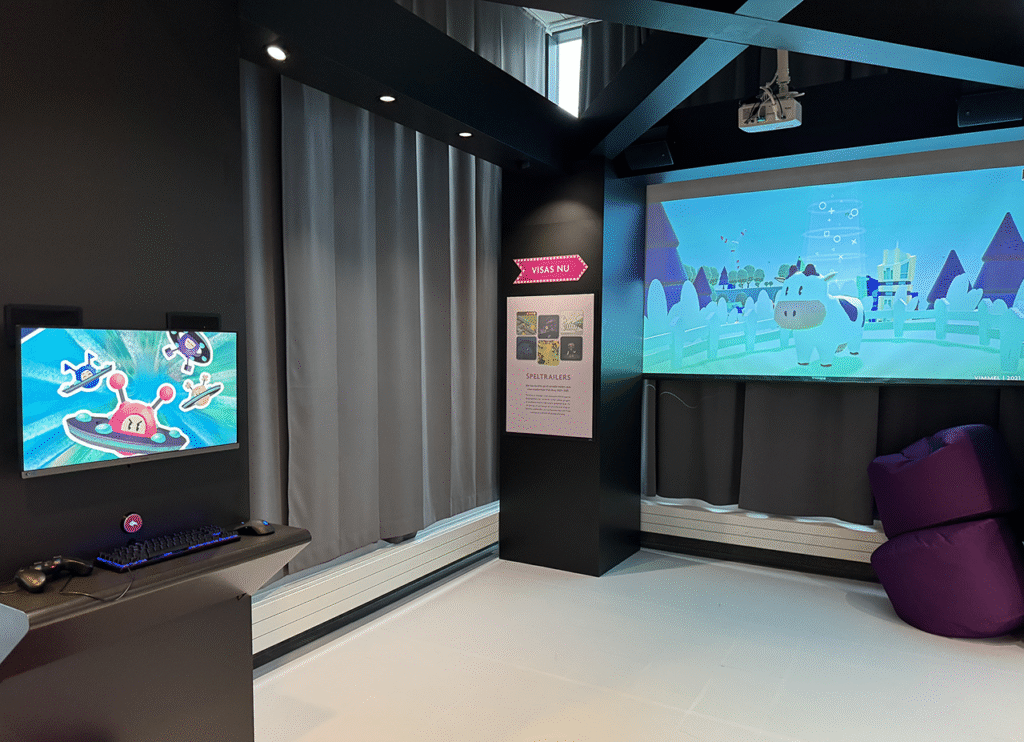
The project was carried out at the University of Skövde, focusing on evaluating an existing demonstrative environment for game development. The work included assessing its physical and digital functionality, identifying strengths, weaknesses and improvement areas and to provide recommendations for further development to support both education and research. The project was carried out together with another student.
Process
Following the client’s demands, the University of Skövde’s visual design language was maintained, which primarily meant the school’s pink color theme, a design that was also perceived positively by the test participants.
Research and analysis
As a preliminary study, a heuristic evaluation of the computer interface was carried out to identify problems before participants began interacting with the environment. This made it possible to formulate questions about potential pain points in the interface in advance. After the tests were conducted with participants, personas and user journeys were created based on the information provided during post-test interviews.
Ideation
A series of concept sketches were created for the environment. These mainly concerned the physical environment but also included sketches of the computer interface. Many ideas focused on how light and sound could be improved to create a more coherent and immersive experience.
Prototyping
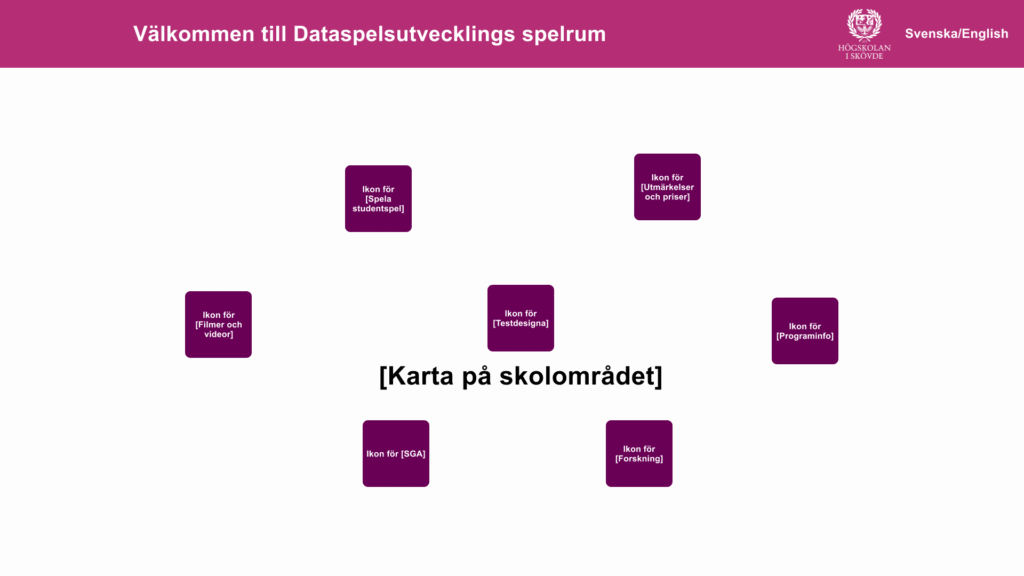
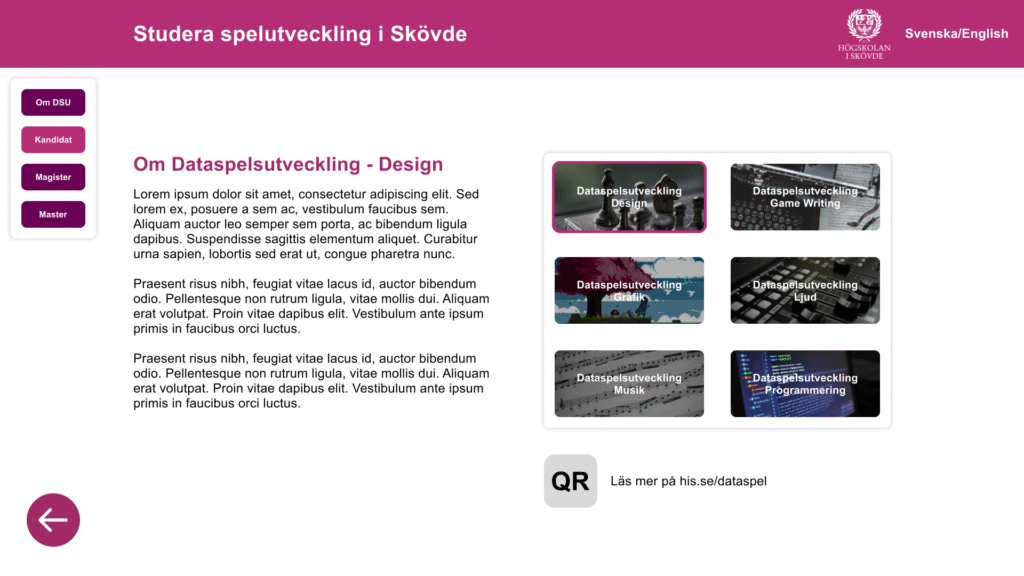
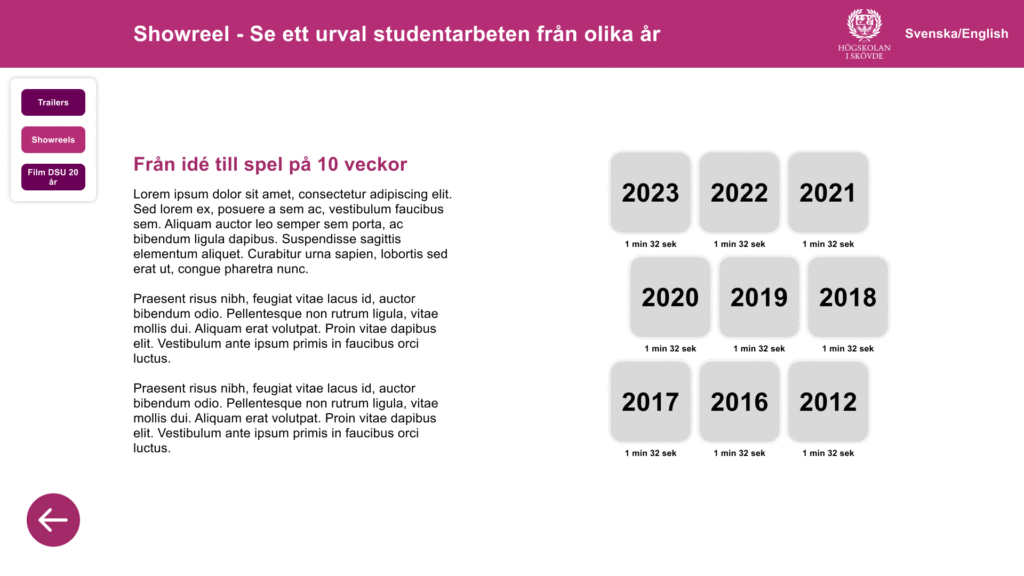
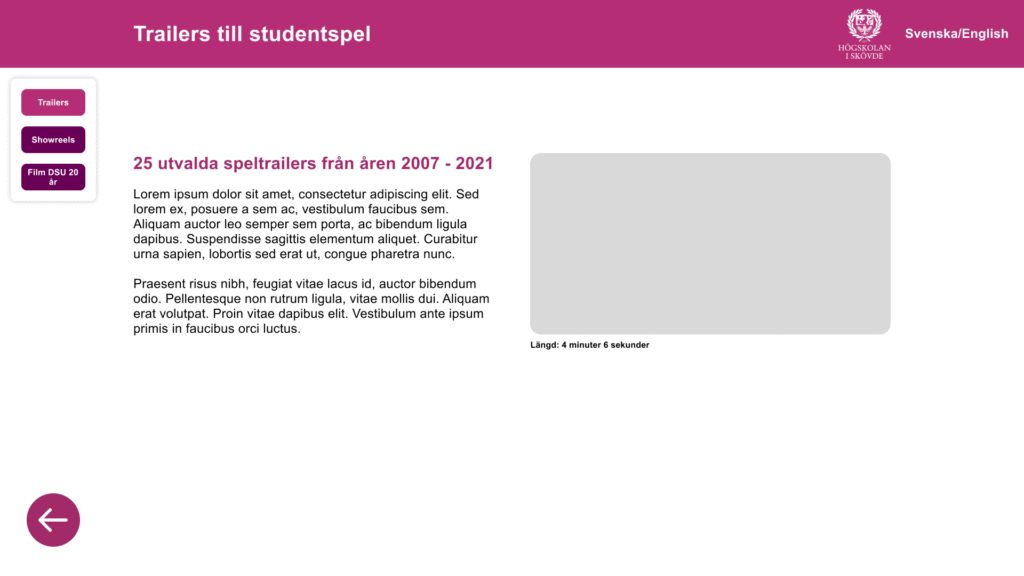
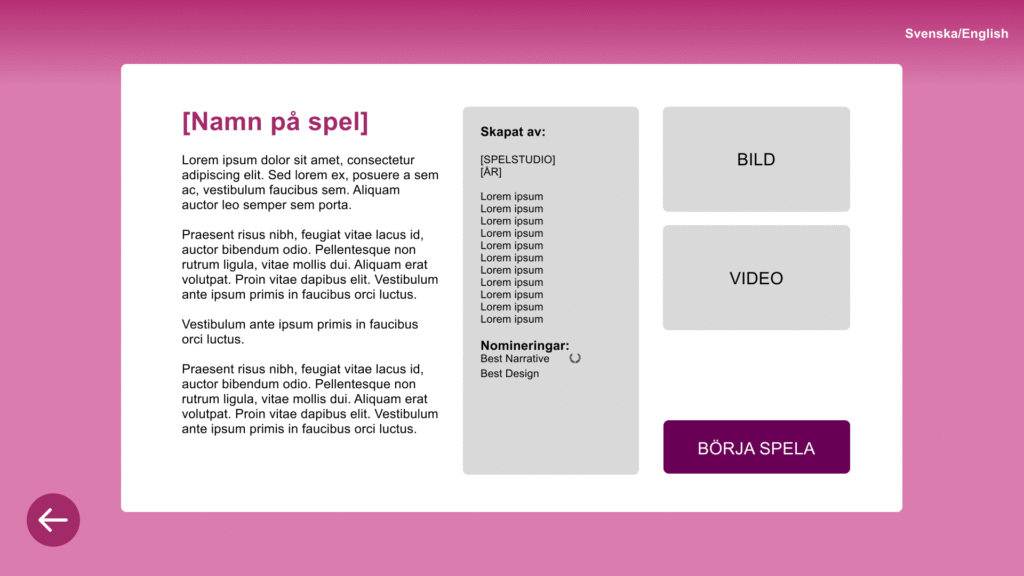
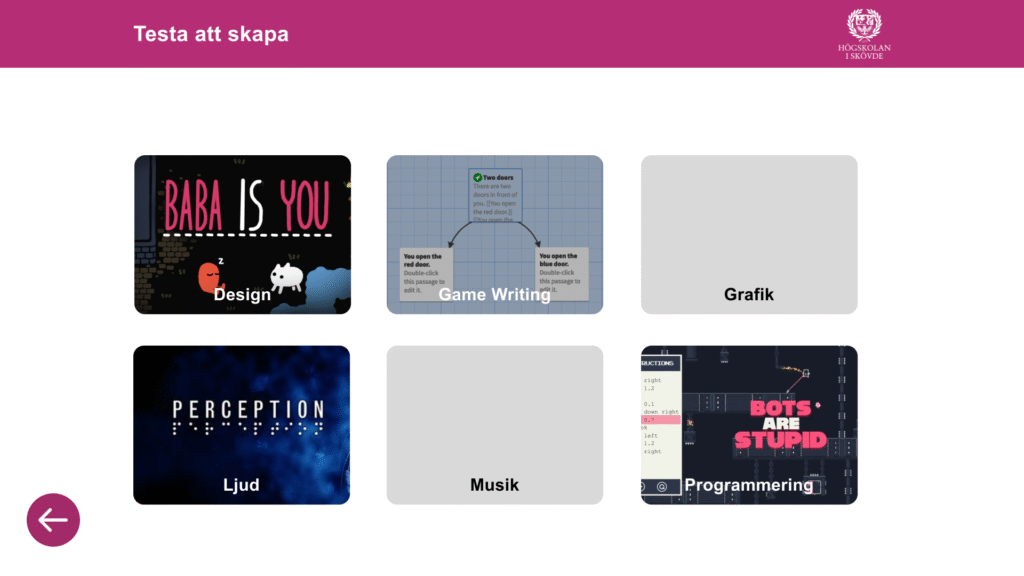
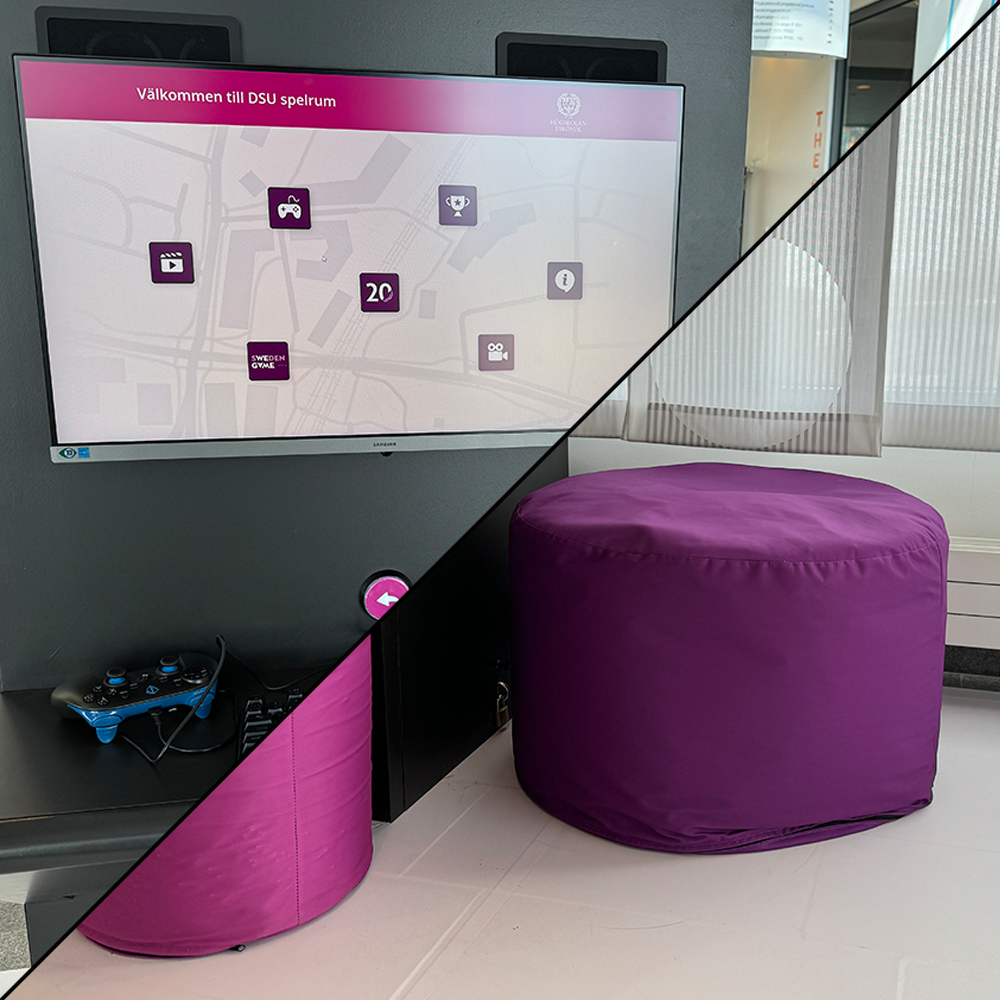
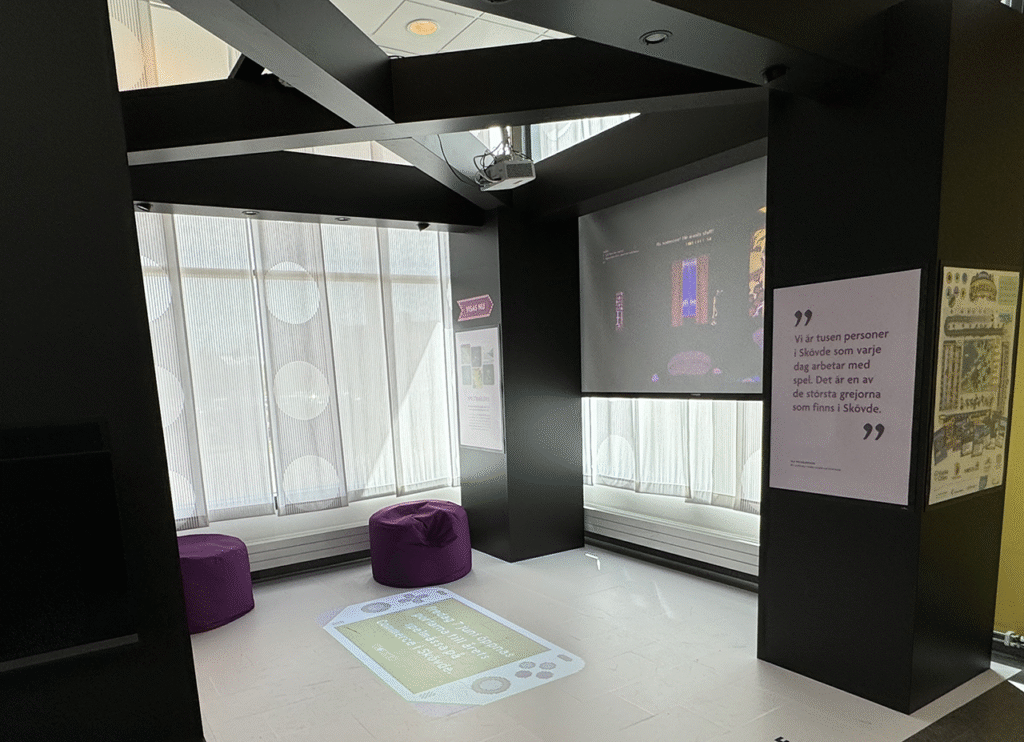
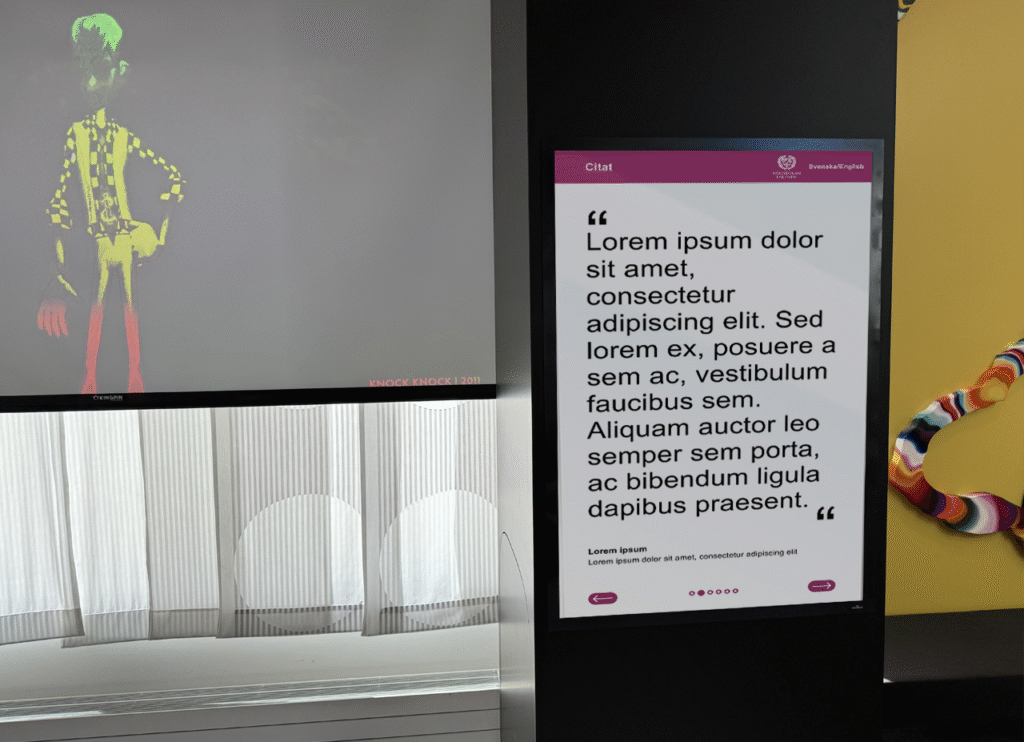
A high-fidelity prototype was developed in Figma to visually communicate the changes to the client in an easily understandable way. The design proposals included both the interface and the physical environment. For the interface, improved usability and navigation due to clearer grouping of elements and preservation of the visual language were the main aspects. For the physical environment, the proposals included changes such as curtain selection, sound enhancements for the projector, headphones for the computers and adjustments to the seating poufs and screen height.
Results
The results below were achieved through close collaboration with the client and the interpretation of the data collected during the test. Working together with a classmate also brought ease to the brainstorming sessions, where our individual interpretations bounced off each other, allowing us to create even better design solutions together.
I placed my focus more on the design aspects of the work, while my classmate concentrated more on the academic part. Despite this, we provided each other with valuable insights regarding both areas. Working in a group in this way enabled rapid creation in the early phases, which in turn led to meaningful insights through a joint reflection, further development, and iteration of the design.
User journey maps
Concept sketches
Change of curtains from light and see-through to block-out
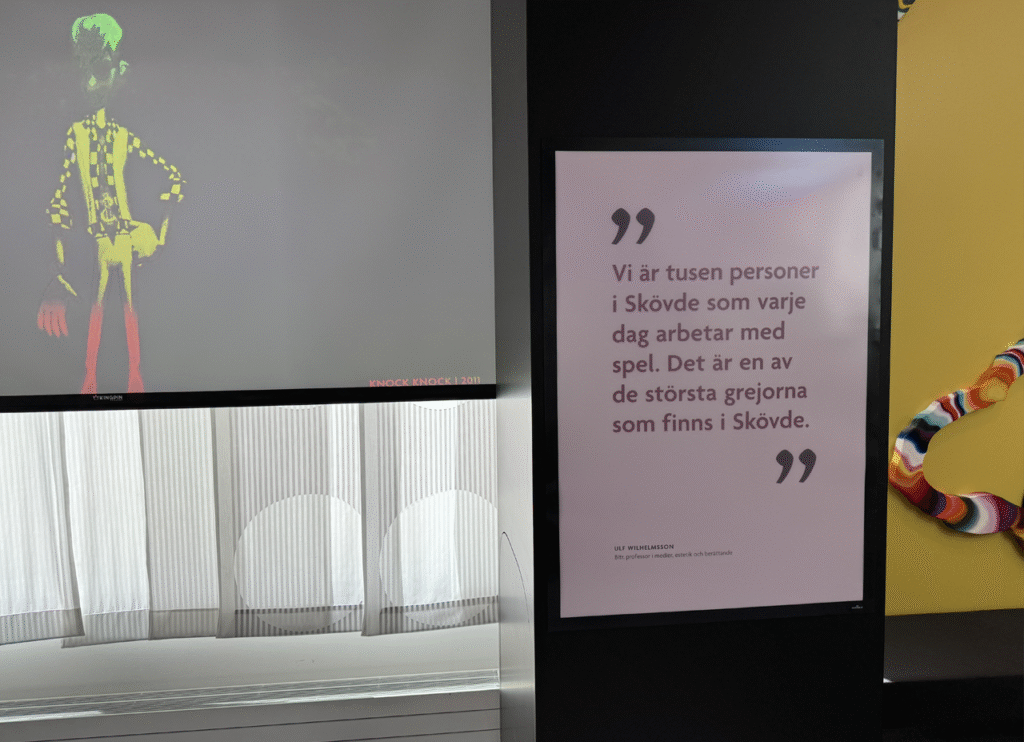
Physical poster and mockup of an interactive touchscreen
Prototype of the computer interface